
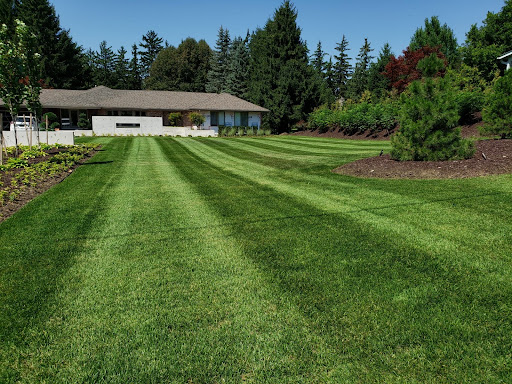
Winter can be long in Southwestern Ontario, and it’s not uncommon to feel a bit discouraged by the state of your lawn. Salt damage, compacted soil, and general wear can leave a lawn looking patchy, thin, and unappealing. The good news is that with the right approach and at the right timing, your lawn can recover beautifully and even come back stronger than before.
Spring lawn care is about doing the right things at the right time, not doing everything at once.
Fixing Your Damaged Lawn
Once the snow has fully melted and the ground has had a chance to mostly dry out, take a walk across your lawn and look for patches that are bare or thinning, matted grass, salt-damaged edges (typically near the driveway, sidewalk, and walkways), and compacted or waterlogged areas.
The first step is to gently rake your lawn to remove debris, break up matted grass, and improve the airflow to the soil. You must be careful not to rake aggressively as the turf in early spring is fragile, and raking harshly can pull out healthy grass.
Small patches that appear damaged can often be repaired with overseeding, while larger bare areas may need more attention.
Aerating Your Lawn
Soil compaction is a common issue after winter, especially in areas with heavy snow accumulation or foot traffic. Compacted soil restricts root growth, limits oxygen, and prevents water and nutrients from successfully penetrating.
Aerating is the process of creating small holes in the soil to reduce soil compaction. Aerating your lawn allows for:
- better oxygen flow to the roots
- improved water flow
- better nutrient absorption
- stronger root development.
In Southwestern Ontario, the best times to aerate are typically in the early fall; however, light aeration in the spring can also benefit a lawn that is heavily compacted.
If you do choose to aerate in the spring, ensure that it’s done when there is no longer a chance of frost. Wait until the soil is no longer overly saturated, and for best results, pair lawn aerating with overseeding.
When Should I Dethatch My Lawn?
Thatch is a layer of dead grass and organic material that accumulates between the surface of the soil and the living grass blades. A small amount of thatch (under 1cm) is normal and even beneficial, but excessive thatch can block water, air, and nutrients.
Spring or early fall are the most ideal times to dethatch your lawn in Southwestern Ontario, but it’s important to know the following before starting:
- Only dethatch if the lawn is actively growing
- Avoid dethatching too early in the season when the grass is still dormant
- If conditions are not ideal, it can cause more harm than good
When to Apply Fertilizers
Many homeowners feel the urge to apply fertilizer to their lawn as soon as the snow melts; however, early spring fertilization is not always necessary, especially if your lawn received proper nutrition in the fall.
Applying fertilizer in the fall helps grass store energy in the root systems, green up earlier in the spring, and develop stronger roots.
Because of this, if you fertilized your lawn in the fall, it likely already has the nutrients it needs when spring arrives.
If you did not fertilize in the fall, or your lawn is struggling, a light application of fertilizer can help. The best time is late spring in Southwestern Ontario (around May to early June) when the grass is actively growing and has been mowed at least a few times.
It’s necessary to avoid heavy fertilization too early in the spring as it can promote excess top growth, weaken root development, and increase the susceptibility to stress later in the summer.
When to Apply Pre-Emergent Herbicides
Pre-emergent herbicides are used to prevent weed seeds, such as crabgrass, from germinating. The timing of applying pre-emergent herbicides is important, and in Southwestern Ontario, they should typically be applied when the soil temperatures consistently reach around 10 °C, which is often around mid to late spring.
Pre-emergent herbicides create a barrier that can also prevent grass seed from germinating. You should avoid using these in any areas where you plan to overseed.
When to Overseed Your Lawn
Overseeding is one of the best ways to repair winter damage, thicken your lawn, and improve its overall appearance. In Ontario, the ideal time to overseed is early fall due to warm soil temperatures, cooler air temperatures, and reduced weed competition; however, overseeding in the spring can still be effective, especially for repairing damage.
Tips for Overseeding in the Spring
- Wait until the soil temperature is consistently above 10 °C
- Rake and loosen the soil before seeding
- Keep the soil moist until germination
- Avoid applying pre-emergent herbicides in seeded areas
Spring seeding can be very successful, but you need to pay more attention to watering and weed control during the spring months than when you seed in the fall.
Should I Roll My Lawn?
Lawn rolling is often done to smooth out uneven ground after winter, but it’s recommended to do so sparingly, as it can also negatively affect your lawn by increasing soil compaction, reducing oxygen availability, and impacting root growth.
If you do decide to roll your lawn, only do so when the soil is slightly moist (not wet), use a light roller (not a heavy one), and limit rolling to areas that truly need leveling.
For most lawns, aeration and proper soil care are better long-term solutions than rolling.
Should I Top-Dress My Lawn?
Top-dressing your lawn involves applying a thin layer of material, typically compost or a soil blend, over your lawn. Top-dressing has many benefits, such as improving the soil structure and enhancing microbial activity. When you top-dress your lawn, you can also help to level minor irregularities with the surface.
Spring can be a good time for top-dressing, especially when you combine it with aeration or overseeding.
Best practices for top-dressing your lawn include applying a thin layer (about 0.5-1cm), using high-quality compost or a suitable soil mix, and ensuring that the grass blades are still visible after applying the top-dress.
Mountview Services Can Help With Your Spring Lawn Care
To revive your lawn after winter, you need to understand what your lawn needs and then treat it accordingly.
Every lawn is different, and so are the weather conditions from year to year across Southwestern Ontario. If you’re unsure where to start or want professional guidance, Mountview Services is here to help you build a lawn care plan that fits your property’s needs.