
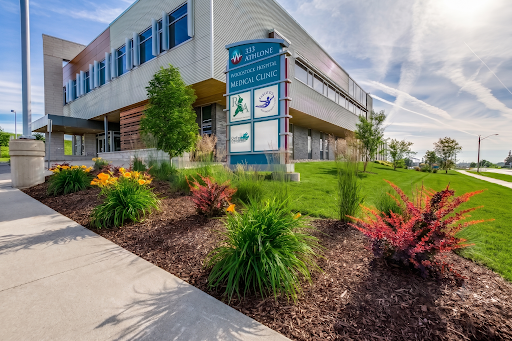
Landscaping plays a much bigger role in healthcare environments than many people may realize. The outdoor spaces at hospitals and healthcare facilities directly impact the safety, accessibility, and recovery of the visitors and patients.
Healthcare facilities and hospitals have some unique landscaping challenges. Many operate 24/7 to service vulnerable populations, and they need to meet strict safety and accessibility standards year-round.
Working with landscaping professionals is especially important in Ontario due to our many shifts in climate. These shifts include harsh winters and summer heat waves, and Mountview Services Inc. is proud to service hospitals and healthcare facilities across Woodstock, Kitchener, Waterloo, Cambridge, and Brantford.
Accessibility for All Patients
Healthcare buildings and the outdoor spaces around them need to be designed and maintained to accommodate everyone safely and comfortably, including people who have mobility challenges, visual issues, and other disabilities.
Clear and Wide Pathways
Landscaping for pathways needs to account for the accommodation of wheelchairs, walkers, and hospital beds. These areas should also be maintained often to make sure that there is no plants or debris spilling onto these paths.
Smooth Transitions Between Surfaces
Transitions between surfaces should be natural because sudden changes between asphalt, concrete, and landscaped areas are often tripping hazards. Instead, the transitions should be gradual and level. This will then reduce the risk of falls and allow for easier movement for wheelchairs and walkers.
No Overgrown Plants Encroaching on Walkways
It is very important to regularly trim plants around areas that people walk through regularly, like entrances, parking lots, and paths, as overgrown plants can become a tripping hazard or make walkways more narrow.
Proper Lighting and Visibility
In Ontario, daylight hours are limited during the winter months, and outdoor lighting is needed for safety. Because of this, areas such as pathways, entrances, and parking areas need adequate lighting to help patients and staff navigate the area easily.
Emergency Access Cannot Be Obstructed
Healthcare facilities and hospitals rely on fast, unobstructed access for emergency services. Emergencies can’t wait. Landscaping and snow removal must be planned with this in mind at all times.
Ambulance Bays
The routes that ambulances take need to be completely clear of snow, ice, debris, and landscaping materials, as even temporary obstructions can delay a person from receiving emergency care.
Emergency Entrances
When there is an emergency, people need to be able to act fast. Emergency entrances and paths need to be constantly monitored and cleared of snow or ice buildup, as well as debris.
Helipad Access Routes
For facilities that are equipped with ground-level helipads, access routes need to be maintained year-round. The accumulation of snow, debris, or overgrown plants can interfere with both ground staff and helicopter operations.
Fire Lanes
Fire lanes should never be obstructed. Elements such as decorative stones, edging, or plant beds all need to be designed so that they never spill into these critical areas.
Winter storms can be intense in Southwestern Ontario. At Mountview, we offer professional snow removal services to healthcare facilities and hospitals. Our timely clearing as well as proactive planning can make all the difference in emergency situations.
High Traffic Means Higher Wear and Tear
Hospitals see a lot more foot traffic than many other commercial properties, and this constant use takes a toll on both the soft and hardscape elements. As a result, repairs to lawns, gardens, and walkways may be more frequent.
Compacted Soil Around Walkways
Regular foot traffic leads to soil compacting that restricts the root growth and overall health of the plants in the surrounding area. This compacted soil can also mess with drainage, which sometimes leads to water pooling. These areas should be monitored and addressed frequently to ensure tripping hazards are eliminated and proper drainage is maintained to prevent icing.
Damaged Turf Near Entrances
Regular foot traffic can make grassy areas that are near the entrances of buildings become worn down. Areas such as these often benefit from more durable options like reinforced turf, ground covers, pavers, or other hardscape items.
Increased Litter and Debris
Healthcare facilities and hospitals accumulate debris quickly as they can see hundreds and even thousands of visitors each day. Extra cleanup may be necessary in these cases to promote a clean and beautiful facility.
Faster Wear on Plant Beds and Edging
Plant beds that are located in busy areas tend to get stepped on or knocked around more often. Regular repairs are needed, including for the edging, as it can crack or move out of place from this extra foot traffic.
Because of this, landscaping plans for healthcare facilities must prioritize durability. This includes using hardy plant species, reinforced edging, and strong hardscaping materials to help ensure that the property’s landscape can hold up to the constant use without making sacrifices to its appearance.
Quiet, Calming Outdoor Spaces Matter
Healthcare facilities and hospitals can be stressful for patients and families. That’s why outdoor areas that include gardens, shaded seating areas, and walking paths matter. When designed well, they give people a chance to step away, clear their heads, and recover emotionally and physically.
Shaded Seating Areas
It’s important to have shaded seating areas for visitors and patients to spend time outdoors comfortably, especially in Ontario’s hot summers. Trees and pergolas are commonly used in these spaces.
Tree-Lined Walkways
Walkways that are lined with trees offer shade and help create a more relaxed, peaceful atmosphere
Seasonal Color from Flowers and Plantings
When a garden is well-cared for and full of color, it can really improve the atmosphere around a facility, and we recommend a mix of different types of plants, including seasonal flowers.
Green Spaces Visible from Patient Rooms
Healthcare facilities and hospitals have many patients who are dealing with medical issues that prevent them from going outside. Being able to look out the window to views of green lawns, trees, and garden beds can make the room feel more open and create a more positive recovery.
Winter Maintenance is Critical
Ontario winters present one of the biggest challenges for healthcare landscaping, and snow and ice can quickly create dangerous conditions if not managed properly.
Emergency Entrances
Emergency entrances should always be clear of snow and ice so that they are quick and easy to use in emergency situations and do not cause other injuries due to slips or falls.
Patient Drop-Off Areas
Areas where patients get dropped off have a lot of vehicle and pedestrian traffic, and it’s especially important to keep these areas clear to help people move around safely and quickly.
Accessible Parking Spots
Accessible parking spots are for people with mobility issues, and keeping these spots fully usable, with clear and simple paths from the parking area to the entrance, should be a priority so that people can move through safely and comfortably.
Sidewalks and Pathways
Keep all walkways clear and treated on a regular basis to prevent ice from forming, as it doesn’t take long for these areas to become slippery and unsafe.
Mountview Services Inc.’s professional snow removal services in Woodstock, Kitchener, Waterloo, Cambridge, and Brantford ensure that healthcare facilities can continue operating without interruption in all seasons and weather conditions.
Infection Control and Cleanliness
It’s no surprise that healthcare facilities must maintain a higher standard of cleanliness than other properties. What some people do not realize is that landscaping also plays a role in supporting the control of infections.
No Standing Water
Standing water can attract pests such as mosquitoes and create unsanitary conditions. Because of this, proper grading and drainage systems are needed to prevent the accumulation of water, helping to reduce erosion and protecting the overall health of nearby plants.
Minimal Debris Around Entrances
Debris such as leaves and dirt that are near building entrances can easily be tracked indoors, reducing the cleanliness of indoor facilities and increasing janitorial costs. Regular outdoor sweeping and maintenance can help reduce this risk and free up hospital resources.
Careful Management of Mulch and Organic Materials
Soil and mulch need to be managed carefully to prevent the growth of mold or bacteria. Mountview Services always uses a premium quality mulch applied at the right depth to provide plants with proper moisture while reducing the chances of mold growth.
The Importance of Professional Landscaping at Healthcare Facilities and Hospitals
Looking after hospital and healthcare facility grounds in Southwestern Ontario is not something that can be handled with a basic maintenance plan. These spaces are constantly in use, often by people who are dealing with mobility challenges, stress, or urgent medical situations. Everything from walkways to plant placement and even snow clearing needs to be handled with care and consistency.
Hospital landscaping also has to stand up to a lot more wear and tear than most properties. There’s constant foot traffic, equipment moving in and out, and the added pressure of keeping everything safe during Ontario winters. Without the right approach, things can quickly become worn down and even hazardous.
At the end of the day, these outdoor spaces play a bigger role than many people think. Thankfully, when the landscaping is handled properly by an experienced team like Mountview, you can trust that all of the important considerations are covered.